

Intercultural Crosstalk
Working and Changing Jobs in Japan ①Previous Careers and Job Hunting
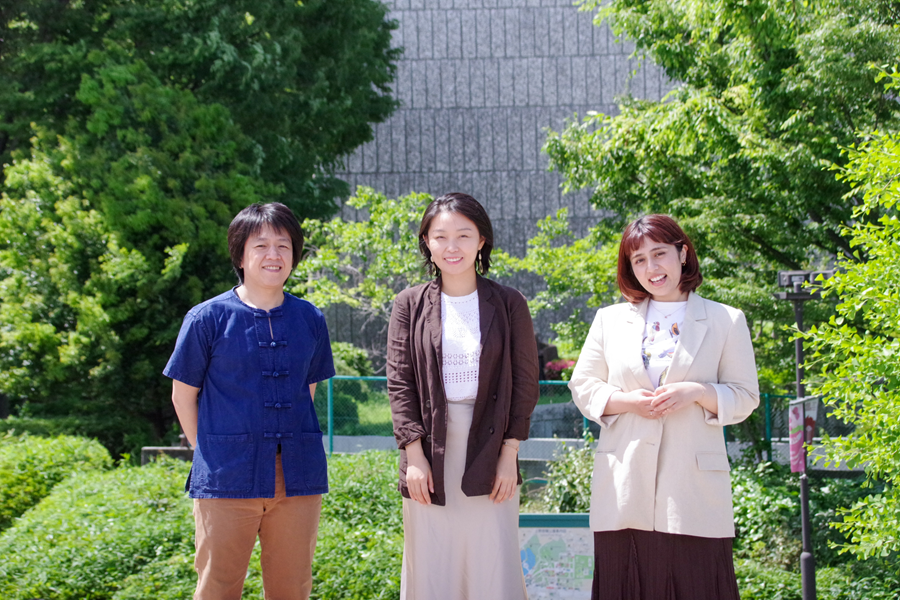
Profiles
Nueng (from Thailand)
- Years of residence in Japan
- 5 years
- Native language
- Thai
- Favorite Japanese words
- “Shogyomujo” (The impermanence of all things)
- Favorite places in Tokyo
- Taito Ward (Ueno Park, Asakusa, etc.)
- Favorite food
- Northern Thai dishes like Gaeng Hung Lay (pork curry) and Gaeng Ho (stir-fried curry)
- Hobbies
- Cooking, soccer video games, walking
- What I wanted to be when I was a child
- Detective (Police officer)
Younju (from South Korea)
- Years of residence in Japan
- 8 years
- Native language
- Korean
- Favorite Japanese words
- “En” (Fate / Connection)
- Favorite places in Tokyo
- Rinshi-no-mori Park
- Favorite food
- Bread, pizza
- Hobbies
- Visiting parks, trying new foods
- What I wanted to be when I was a child
- Advertising or commercial producer
Marianne (from Japan; Roots in Pakistan and Peru)
- Years of residence in Japan
- 21 years
- Native language
- None. A blend of Japanese, English, Spanish, and Urdu
- Favorite Japanese words
- “Chūcho” (Hesitation)
- Favorite places in Tokyo
- Kuramae and Takadanobaba
- Favorite food
- French fries and scallops
- Hobbies
- Film photography, thrift shopping, discovering great bakeries
- What I wanted to be when I was a child
- Flight attendant and veterinarian
Round 1: Previous Careers and Job Hunting
Welcome to the first of a 3-part roundtable discussion series on “Working and Changing Jobs in Japan.” Today, a large number of foreign residents live and build their careers in Tokyo. We sat down with 3 individuals working in the Tokyo metropolitan area to talk about their professional journeys and career changes.
Could You Tell Us About the Environment You Grew Up In and Your Career Path So Far?
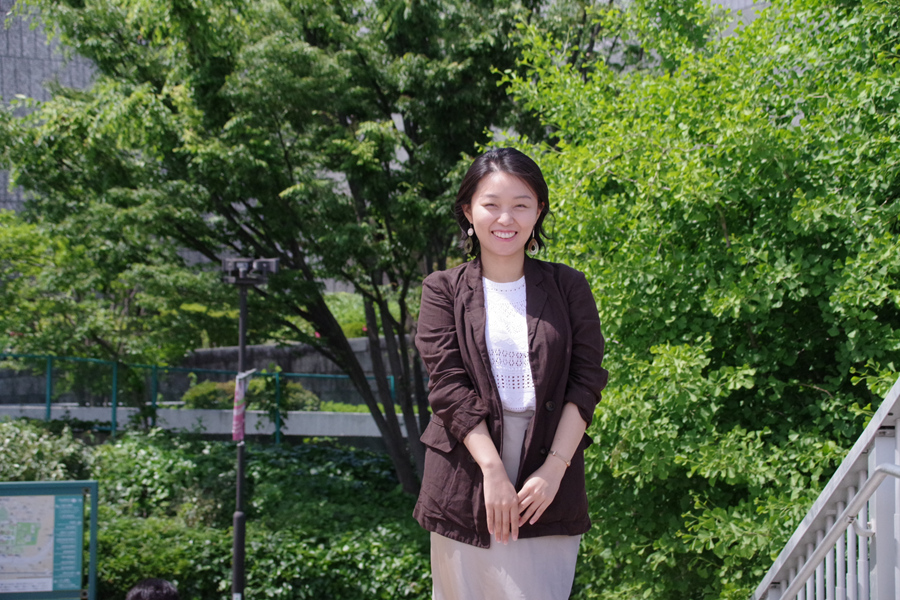
I was born in Saitama, Japan. My mother is a Japanese-Peruvian (Nikkei Peruvian), and my father is Pakistani. From sixth grade through my junior year of high school, I lived with my family in Pakistan, but returned to Japan for university. My first job out of school was at a foreign-owned company in Japan. After that, I transitioned to a Japanese company, and the firm I am with now is my third employer.
I’m originally from Seoul, South Korea. When I was in middle school, my family moved to Manila in the Philippines. I later came to Japan for university. Like Marianne, I started my career at a foreign-owned company right after graduating, but I later changed jobs and am currently at my second company.
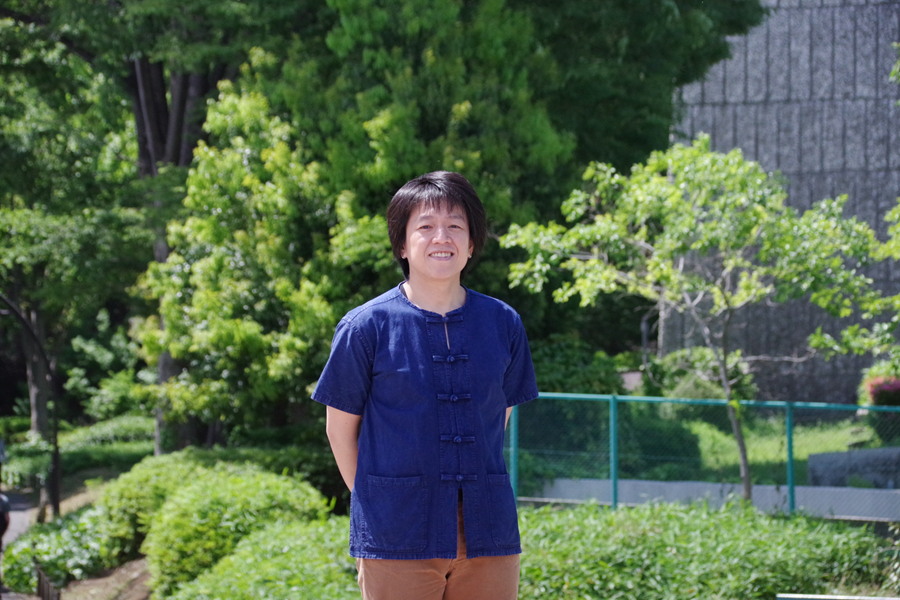
I’m from Lamphun in Northern Thailand. I was born and raised in Thailand and started out working for a Japanese company there. I went back and forth between Japan and Thailand through study abroad programs and technical intern training before joining my current Japanese employer in 2021. I’ve worked for 5 companies in total, primarily in the manufacturing sector.
What Originally Brought You to Japan?
I studied Japanese in high school and university. During my university years, I received a scholarship and spent a year studying in Japan. After graduating, I worked at a Japanese-owned factory in Thailand, but I was shocked to find that my Japanese wasn’t sufficient for the job. To improve my language skills, I decided to return to Japan as a technical intern, and that marked the beginning of my career in Japan.
I was born and raised in South Korea, and later attended high school in Manila. As I thought about my future, I began to feel that I wanted to immerse myself in a culture that was close to Korea yet different. While living in the Philippines, I found the cultural differences between foreign countries and my own to be fascinating. Even within Asia, viewing Korean culture from an outsider’s perspective sparked an even greater interest in other cultures, which led me to decide to study abroad in Japan.
Even though I was born in Japan, the cultural differences between my home life and the outside world made it hard for me to fit in during elementary school. Because of that, I moved to Pakistan in the sixth grade. Later on, considering what I wanted to study and the environment I wanted to be in, I chose to return to Japan for university.
What Did You Major in at University?
When I was in middle and high school, I was deeply fascinated by advanced life sciences. Because people often pointed out that I looked different, and because I learned about global conflicts rooted in cultural differences, I found myself constantly asking, “Why are humans different?” That’s what sparked my interest in DNA. When I heard that Japan was making great strides in DNA genome-editing research, I chose to attend university here.
I majored in International Regional Studies, specifically focusing on community development and local engagement. The year my family moved to the Philippines, a massive typhoon hit the country. While our neighborhood was safe, I watched the news in a language I couldn’t yet fully understand, seeing so many people across the country suffering. Witnessing the sheer resilience of people rebuilding their communities made me want to help. Knowing that Japan has significant expertise in natural disaster recovery, I wanted to study those systems here.
You both have such incredible awareness of world issues.
For me, I got interested in Japan during a huge Japanese pop-culture boom when I was in high school. Japanese dramas and J-POP were everywhere, and you could buy all sorts of Japanese products. While English and other Western languages use the alphabet as their common writing system, Japanese and Chinese use different characters. I found this unique and interesting, and I felt that being able to speak Japanese would be an asset in the future, so I started studying it.
What Kind of Company Did You Join After Graduating University, and Why Did You Choose It?
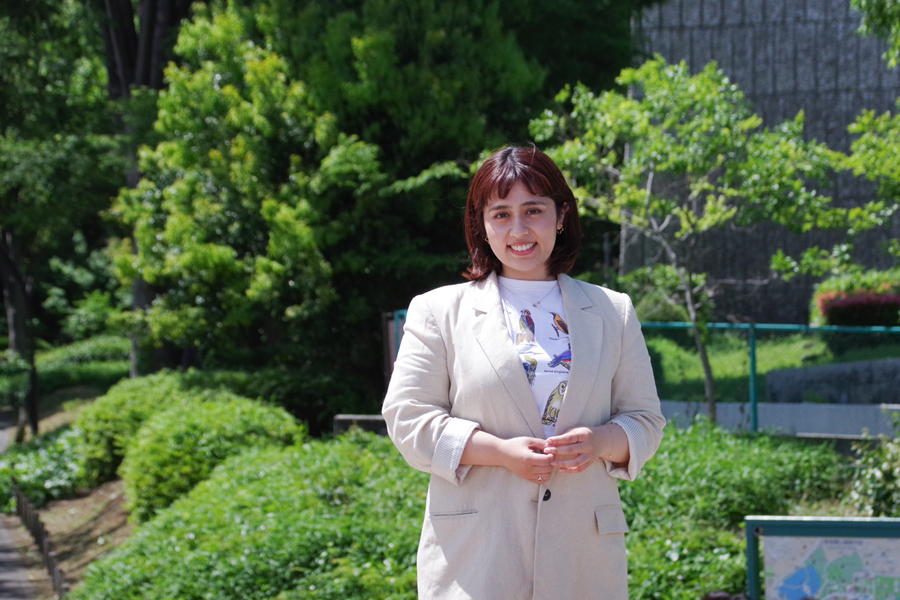
Initially, I wanted to work in a country that had absolutely nothing to do with my heritage. I had studied abroad in Spain for a year, and found it incredibly open and easy to live in. However, everything changed when I attended a photography exhibition. A Jewish photographer there said, “Concealing your roots might be easier, but sharing them paves the way for the next generation.” That really shifted my perspective. I realized that by staying and working in Japan, I could perhaps inspire someone else.
From there, I looked for a job in Japan and decided to join a foreign-affiliated IT consulting firm. Although I had done an internship working with children from multicultural backgrounds during my student years, I felt my experience was limited. I believed that gaining experience in IT and management would be valuable for broadening my skill set.
I also started at a foreign IT company. Having moved across South Korea, the Philippines, and Japan, I always found joy in learning new languages and cultures. On the flip side, even in Japan, I often felt viewed as an outsider or a “foreigner” rather than a true member of the community. While trying to figure out how I could best leverage my strengths to contribute, I discovered programming. Coding is really just another language. I realized that if I applied my language-learning skills to mastering programming languages, I could truly thrive as an integral part of the community.
My first job was at a Japanese factory near my hometown in Thailand, acting as an interpreter between the Thai and Japanese workers. I originally chose it because it offered stability, but I hit a wall with my Japanese almost immediately. I couldn’t understand the regional accents of the Japanese staff, and I didn’t know any of the specialized manufacturing terminology. I ended up taping vocabulary words all over the walls of my house to study. Over time, my desire to learn more grew so strong that after about 3 years, I moved to Japan to work at a factory as a technical intern trainee.
How Did You Go About Your Job Search?
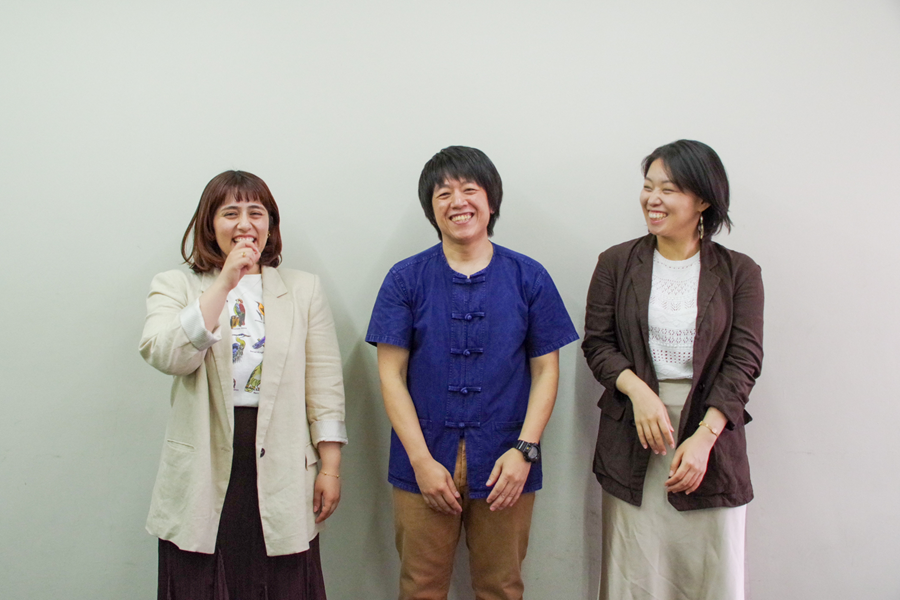
Since I’m from a slightly different generation than you two, applying online wasn’t an option back then. I literally rode my motorcycle around looking for potential factories and companies. In those days, factories would put up blackboards outside their buildings with job openings listed on them. Applicants would fill out an application form on the spot and hand over their graduation certificates. Then, if you got a callback, you’d interview. I applied to 3 or 4 companies that way, and got job offers from every single one.
It’s true—the process is different from how it is now.
I was registered on a job search site for bilingual professionals. When I received a recruitment offer there, I would communicate with the company, submit my CV, and proceed with the interview online.
Same here. I registered on a site and did all my interviews online.
Unbelievable. It really has changed completely (laughs).
Like Nueng, I applied to about 3 or 4 companies. I was a bit conflicted about my career path, so I didn’t start looking until the summer of my senior year, whereas my friends had started preparing back in their junior year.
I applied to about 2 companies myself. At the time, I just couldn’t picture myself working as a corporate employee. I told myself that if I didn’t get hired anywhere, I'd just become a barista (laughs).
In this first session, we looked back at everyone’s backgrounds and the start of their careers. In Round 2, they will share their personal experiences with changing jobs.
── Continued in the Following Issues